

All updates
Publish
2026
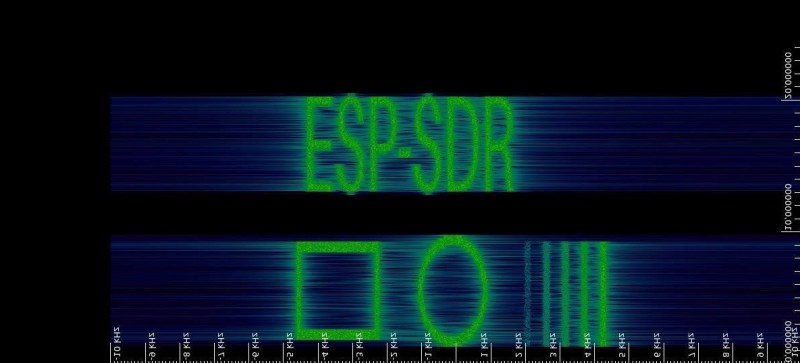
ESP32 Firmware Adds Experimental Transmit Capability to an SDR Hack
Developer Murmel has released an early version of ESP32 firmware that extends recent work exposing raw radio samples from the 2.4 GHz radios in some ESP32 variants. The earlier hacks provided listen-only software-defined radio functionality; the new firmware can also transmit and has been demonstrated working with gqrx. In a demo, an ESP32-S3 and ESP32-C6 communicate using a Hellschreiber mode devised by the developer. Work is also underway on 802.15.4 modulation, but the article describes that as in progress, not as a completed ZigBee capability. Espressif’s API reportedly indicates tuning as low as 100 MHz, though the article cautions that the radios’ filters may make operation there ineffective. This remains an early experiment, with no broader performance measurements or confirmation of reliable operation across ESP32 models provided.
The concrete advance is an early firmware demo of ESP32 radio transmission, including S3-to-C6 communication; 802.15.4 remains in development, and performance or broad compatibility is not established.

ESP32-S3 Project Plays Video by Streaming JPEG Frames from microSD
Tech Talkies has built a miniature television-style video player using a MaTouch Lite ESP32-S3 board with a 2.4-inch ST7789 SPI IPS touchscreen. Rather than decode H.264 on the microcontroller, the project converts a clip in advance into sequential JPEG images resized to the display’s resolution. The ESP32-S3 reads those frames from a microSD card and draws them to the screen, creating video-like playback while keeping the image data off the board’s internal flash. Firmware is available through the Tech Talkies Flasher page. The project does not describe measured playback performance or broader format support; a simpler conversion tool, playback controls and support for additional display resolutions are listed as future additions.
This is a concrete, reproducible ESP32-S3 hardware project with a practical frame-based playback approach; performance data and several usability features are not provided or complete.

WireClaw Video Shows an OpenClaw Port for ESP32, but Setup Hits an LLM Error
A Seeed Studio Forum user, posting as cgwaltney Christopher, has shared a video introducing WireClaw, described as a port of OpenClaw for the ESP32. The post provides no technical details about supported boards, installation requirements, capabilities, or performance. In a follow-up, the poster says they encountered an error while following the tutorial: asking the chat for the chip temperature at about 16:30 in the video returned “error:LLM Call Failed.” The thread had not received an answer at the time described, leaving the cause and any workaround unresolved. The material establishes that the port is being demonstrated, but does not verify how broadly it works or whether the reported failure is typical.
The post identifies an ESP32 port and a reproducible-looking failure report, but offers no specifications, independent validation, or confirmed fix; practical value is limited.
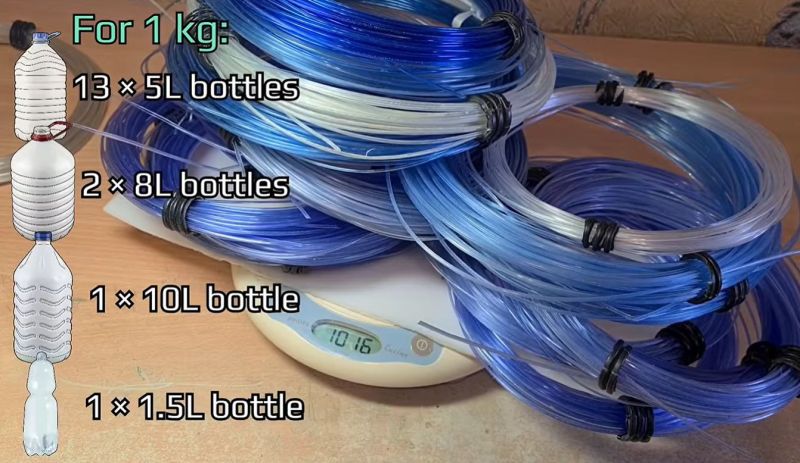
PETCraft Turns 16 Recycled Bottles Into a 1 kg Spool of 3D-Printer Filament
A PETCraft video documents the labor involved in converting discarded bottles into a 1 kg spool of filament using a largely DIY setup. The process heat-smooths bottles, cuts them into narrow strips with a homemade cutter, then feeds the strips through a heated extruder and winds the output onto a spool. The reported batch used thirteen 5-liter bottles, one 10-liter bottle, two 8-liter bottles and one 1.5-liter bottle. Printing with the homemade filament is described as a future step, so the material’s print performance is not yet demonstrated in this account. The article characterizes the bottles as PETG, but supplies no independent material testing. It frames the practical tradeoff as substantial cleaning, cutting and spooling work versus potentially saving $10–20 compared with a commercial 1 kg PETG spool.
The video provides a concrete bottle count and DIY recycling workflow, but printing results are still pending and the claimed material identity and savings are not independently tested.

Tilefinch Brings a Modern Web Browser to the PlayStation Portable
Developer Steve Janovitz has created Tilefinch, a modern web browser for Sony’s more than 20-year-old PlayStation Portable. The handheld’s 333 MHz MIPS32 processor and, on most models, 64 MB of RAM are far below the resources expected by current browsers, so the project relies on lightweight components: Lexbor for browser rendering and QuickJS for JavaScript, alongside PSP capabilities such as hardware video decoding. The article presents this as a demonstration that modern web access may be possible on constrained hardware, and suggests similar devices could be worth exploring. However, the author did not have a PSP available to test the browser, so its rendering quality, speed and practical usability are not independently verified; the proposed relevance to other platforms is also speculative.
Tilefinch is a concrete browser project adapted to the PSP’s limited hardware, using Lexbor and QuickJS. Its performance and rendering were not tested, and broader platform implications remain speculative.
2026
Keiko Uses Arduino UNO Q and Edge AI for Whale Acoustic Monitoring
Taha Rawjani and Matthew Li created Keiko, an acoustic monitoring system powered by Arduino UNO Q that uses underwater vocalizations and edge AI to help track whales in Cape Cod. The post provides no details on its methods, performance, or deployment.
The post identifies a concrete hardware-based wildlife-monitoring system and its intended use, but offers no technical evidence, specifications, or results to assess its effectiveness.
Seeed Studio Announces Wio Tracker L2 Pro Mesh Device
Seeed Studio announces the Wio Tracker L2 Pro, a standalone mesh device featuring offline maps, a 3.2-inch touchscreen and an ESP32-S3. The post advertises a 15% early-bird discount but provides no further specifications or performance evidence.
The post gives concrete product information and listed hardware features, making it relevant and publishable; it offers no independent performance evidence or detail on capabilities beyond those claims.
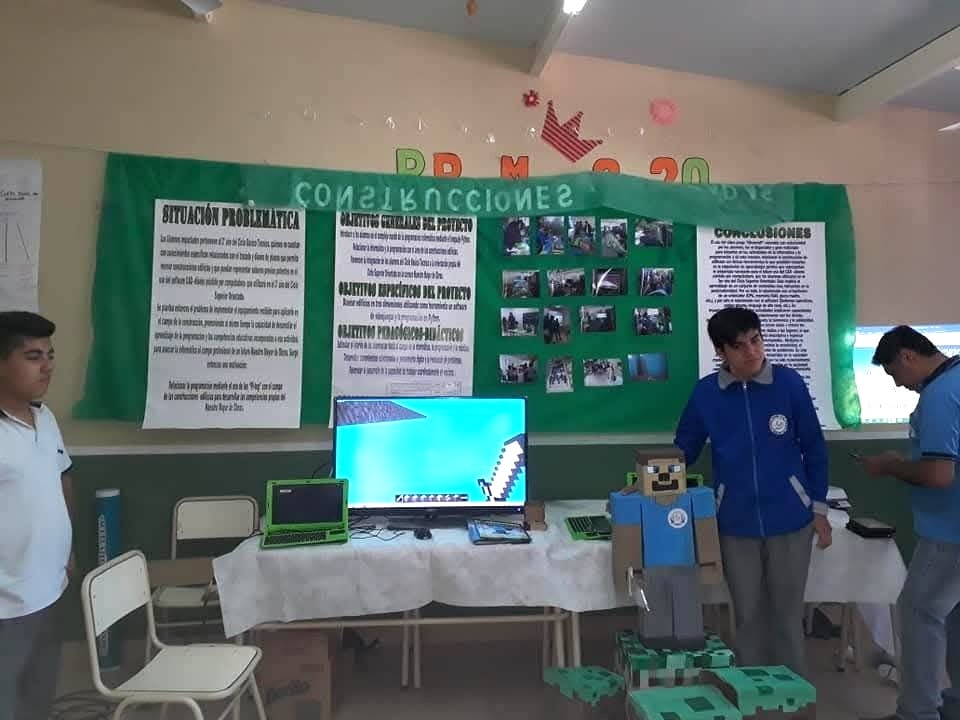
Teacher-Led Raspberry Pi Workshops Bring Coding and Robotics to Rural Argentina
Eliana Otrera, a teacher in Forres, Santiago del Estero, has helped introduce computing activities in rural Argentine schools and organize community Raspberry Jams. She began teaching coding and robotics in rural schools in 2017 through the Conectar Igualdad program, which introduced her to Raspberry Pi through educational Pi-Top computers. After promoting Raspberry Pi among colleagues, she and two collaborators held the province’s first community Raspberry Pi workshop in Forres on 6 March 2020, then continued sessions at schools and community venues in nearby areas. The article describes student work ranging from decorated electronic quiz games and basic robots to Python-and-Minecraft building projects. It also reports that a student greenhouse project has developed toward agricultural applications including irrigation control, drone deployment, and crop planning. These are examples recounted by the teacher; the article provides no independent evaluation, participant numbers, or quantified outcomes.
The article documents a sustained, locally organized computing-education effort and concrete student project examples, but offers no scale data or independent evidence of outcomes.
2026
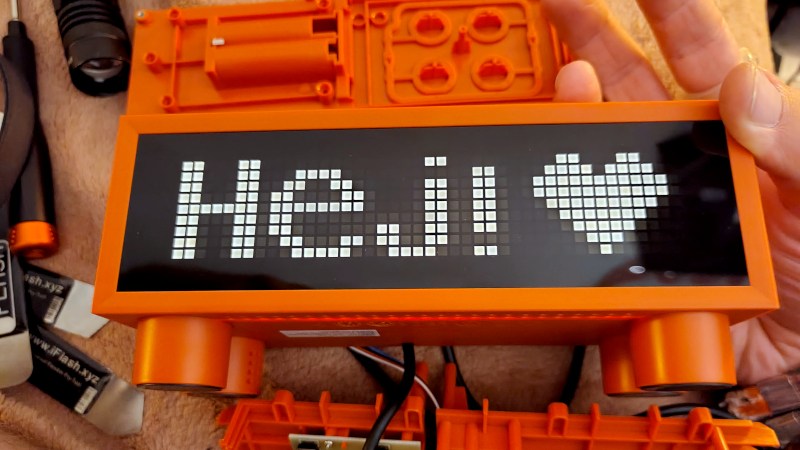
IKEA Kortlinje Clock Offers an Accessible LED-Matrix Hacking Target
The IKEA Kortlinje is a roughly $20 digital clock with a white LED-matrix display, thermometer and hygrometer. A hardware teardown found three VK1640 LED controllers, an unidentified microcontroller paired with a 32.768 kHz watch crystal, and an unmarked chip whose role is still uncertain; it may relate to I2C switching or the sensors. The report says the microcontroller can be desoldered and replaced, potentially giving a hobbyist control of the display drivers and I2C-connected functions. Early activity includes a RevSpace hackerspace post and an initial firmware effort on GitHub by VIPnytt. The device is therefore an emerging modification project, not a demonstrated, mature platform: the mystery chip has not been identified, and no completed custom firmware or broader capabilities are described.
The teardown identifies accessible display-control hardware and early community firmware work, but the chip functions remain uncertain and no completed hack or verified capabilities are reported.
Seeed Tests RK3576 Module Compatibility with Raspberry Pi CM4 IO Board
Seeed says it is testing its reComputer RK3576 module with a Raspberry Pi CM4 IO Board. HDMI output, Ethernet, PCIe expansion and Micro USB flashing are reported working, while other interfaces remain under adaptation and validation.
The post reports specific interface compatibility progress, but testing is ongoing and it provides no independent validation or details on the remaining interfaces.
Semtech LR2012 Enters Production as Seeed Offers a $99 Evaluation Kit
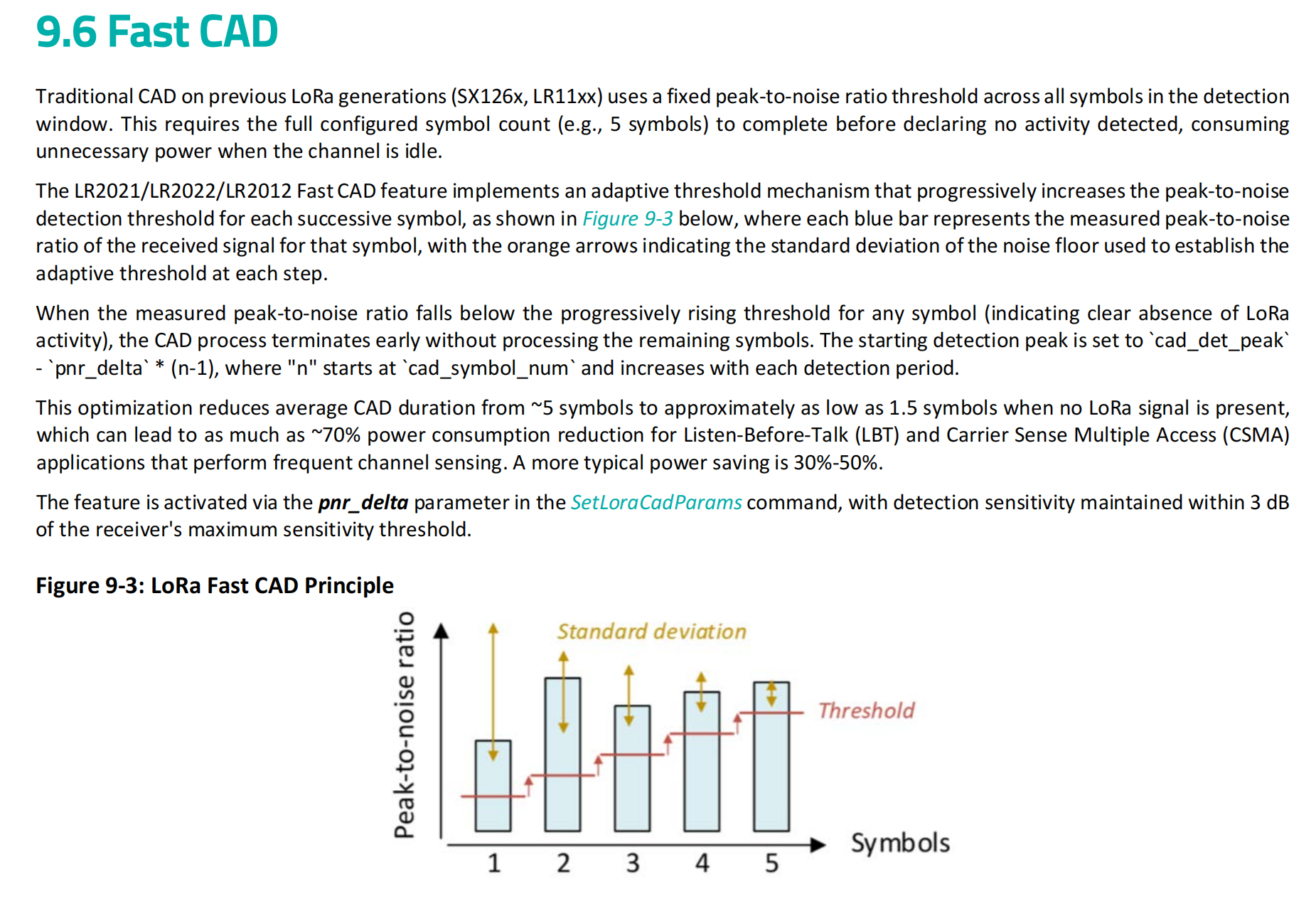
Semtech announced on August 19, 2026, that the LR2012 and LR2022 entered production, bringing its fourth-generation LoRa Plus lineup to three production-ready transceivers alongside LR2021. The LR2012 targets Sub-GHz devices such as meters and sensors, supporting LoRa, FSK, OOK and LR-FHSS. Semtech specifies sensitivity of −141.5 dBm at SF12 and 125 kHz bandwidth, and describes features including fast channel activity detection and multi-spreading-factor reception; the article does not provide independent performance testing. Seeed Studio, a Semtech partner, offers an LR2012 evaluation kit with two radio boards and XIAO nRF54L15 modules in EU868, US915 and CN490 versions. Its software supports link, packet-error-rate, RF and power evaluation, with USP and Zephyr integration for prototyping. The article lists the kit at $99. Semtech’s production announcement also identifies Zenner USA and Engelmann Sensor GmbH as companies selecting LR2012 for metering products.
This is a concrete component production milestone with useful radio specifications and a regional evaluation kit; performance claims are presented without independent validation.
NEC ProSpeed 286 Laptop Rebuilt as a Raspberry Pi-Powered Retro Battlestation
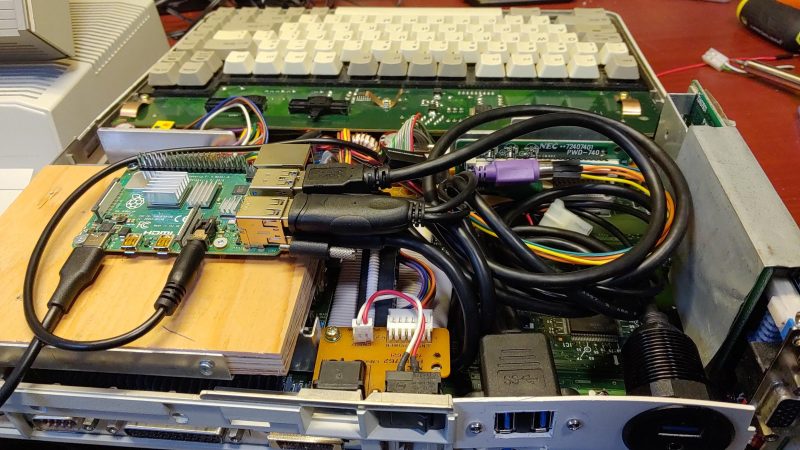
Cory Whitesell has repurposed an NEC ProSpeed 286 laptop after repair attempts failed, preserving its exterior and as much of the original hardware as practical. The original power supply remains in place and supplies power through the former hard drive’s Molex connector to a Raspberry Pi fitted inside the case. The original keyboard works through a PS/2-to-USB adapter, while the laptop’s passive-matrix LCD has been replaced by a modern display with the same dimensions. The Pi runs emulation for a DOS-era experience and also supports more contemporary uses, according to the article. The drive bay could accommodate a different compact computer later, though no replacement is described as installed. This is a single retrocomputing restoration project, not a commercial product or a validated performance comparison; the article gives no detailed measurements or cost information.
The project shows a specific way to reuse a 286 laptop with a Pi while retaining key components, but it is a one-off modification with no measured performance or cost data.
2026

How to Power a Raspberry Pi over Ethernet with PoE
The article points to a PiMyLifeUp guide explaining how to power a Raspberry Pi through an Ethernet connection using Power over Ethernet (PoE). This can combine network connectivity and power delivery on one cable, which is useful where Ethernet is already being run and a nearby power outlet is inconvenient. The material says Raspberry Pi boards gained PoE functionality beginning with the Raspberry Pi 3, but a compatible HAT is required to expose and use power from the Ethernet port. It also notes that PoE-capable switches can be an affordable option, though it provides no specific prices, installation steps, compatibility list, or performance testing. The item is an explainer about an existing capability, not a new Raspberry Pi product or PoE standard announcement.
This is a relevant, practical Raspberry Pi hardware explainer, but the supplied material offers no detailed steps, compatibility data, or new product announcement.
A Two-Component, 3D-Printed H-Shifter for Racing Sim Setups
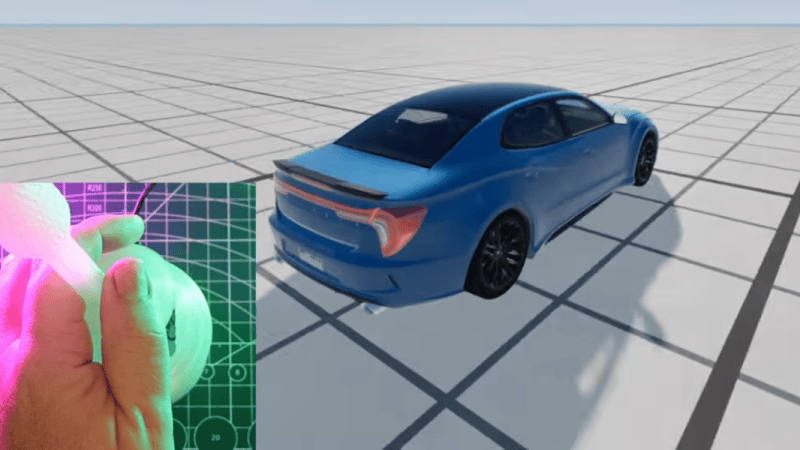
Jason has demonstrated a low-cost H-pattern shifter for driving simulators built around two electronic components: a game-controller-style joystick and an Arduino Pro Micro. The electronics use a straightforward wiring arrangement, while a prototype 3D-printed enclosure and shift knob provide the physical gate and can be shaped for a chosen H pattern. The builder also demonstrates readily available firmware with options for different shifter configurations. The project suggests a relatively simple route to adding a shifter to a DIY sim setup, but the two-part count applies to the electronics, not the complete build: it also depends on a printed case and knob. The article describes it as a prototype and provides no measured cost, durability, or performance results.
The article documents a concrete DIY shifter design using common electronics and configurable firmware; it remains a prototype, with no cost or performance testing reported.

Open-Source Raspberry Pi Camera Automates a Garden Renovation Time-Lapse
Atypical Workshop built a time-lapse camera to document a garden renovation, using a Raspberry Pi 4 and Camera Module 3 Wide in a custom housing with power delivered over a single PoE cable. Its open-source software captures full-resolution 12-megapixel images every minute during daylight, calculating the capture window from latitude and longitude to account for seasonal changes. The system manages storage by deleting the oldest frames when the SD card exceeds 85% capacity. A Mac can automatically collect the image archive when its drive is connected, and a single command creates a video from a selected date range. The builder also describes a film mode and phone control. A step-by-step guide is still in progress; the article points readers to GitHub, YouTube, and Reddit for current details and mentions a project cost breakdown without stating the amount.
The project provides a specific, open-source Raspberry Pi camera workflow and useful capture and storage details; a complete step-by-step guide is not yet available, and no independent performance testing is reported.
TP223 Touch Modules Offer Low-Power Switching Through Nonmetal Panels
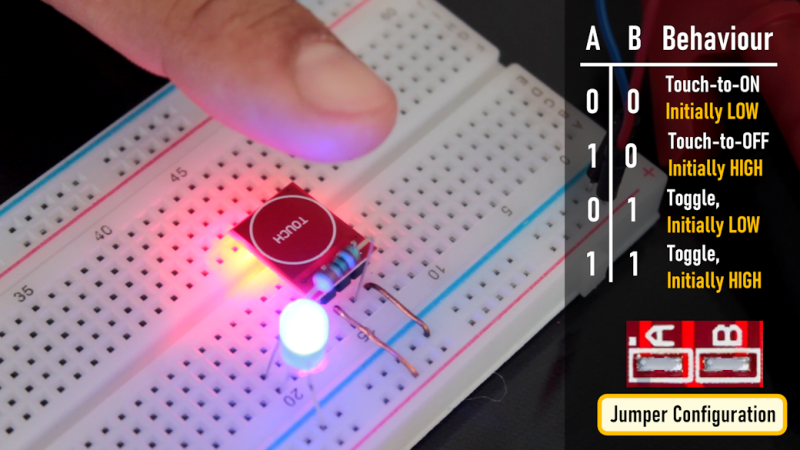
A Hackaday report describes using inexpensive TP223 capacitive-touch modules as alternatives to mechanical switches in project enclosures. The sensors can detect touch through plastic, glass, or wood, although increasing the panel thickness reduces sensitivity; a smaller touch pad or an external capacitor can also shorten the sensing range. The report says the modules draw less than 2 microamps at rest. Two initially unsoldered jumpers provide four output configurations: the default output goes high while touched, jumper A inverts that behavior, jumper B toggles the output with each press, and using both combines toggling with the opposite default state. A small capacitor on the power supply is suggested to address false triggers. The article notes possible use in 3D-printed designs and as a power switch, but gives no independent measurements or detailed implementation results.
The article provides practical configuration and power details for a touch-sensor module, but offers no independent testing or demonstrated project beyond the described use.

key-right Brings Local Matter Control to Elgato Key Lights With an ESP32-C3 Swap
Michael (@micthiesen) has published key-right, a Rust firmware project for replacing the Realtek controller in an Elgato Key Light with an ESP32-C3-MINI-1. The modification retains the lamp’s PCA9635 LED driver, stock driver circuitry, LEDs and power supply, and is intended to provide local Apple Home control over Matter and Wi-Fi without cloud service. Each lamp appears as a Matter Color Temperature Light with power, brightness and white-temperature controls. The reported brightness mapping limits Home’s 100% setting to the lamp’s nominal 1–10% range, while color temperature spans 143–344 mired (about 6,993–2,907 K). Two lamps pair separately and can then be grouped in Home. The ESP32-C3 communicates with the retained LED driver over I²C and draws power from the lamp’s 3.37 V rail. Version 0.1.4 adds eased transitions lasting 400 ms. The supplied material describes the project and its configuration but provides no independent performance testing.
The project offers a concrete controller replacement and local Matter integration while preserving the lamp hardware. Its usefulness is limited by the reported low brightness ceiling and lack of independent testing.

DIY Halloween Fog Machine Adds Motion Sensing and Adafruit IO Control
The article introduces a DIY Halloween project that modifies a standard store-bought fog machine to react to motion, add lighting, and connect with Adafruit IO for remote control of the lights and fog from a smartphone. It suggests using the setup for a yard or haunted-house display, such as triggering a fog effect when trick-or-treaters pass. The supplied material presents this as a guide but does not include its build steps, component list, circuit details, safety information, or evidence of tested performance; those specifics cannot be assessed from the text provided.
This is a concrete, reusable hardware project involving motion sensing and remote control, but the supplied excerpt omits implementation details and any evidence about reliability or safety.
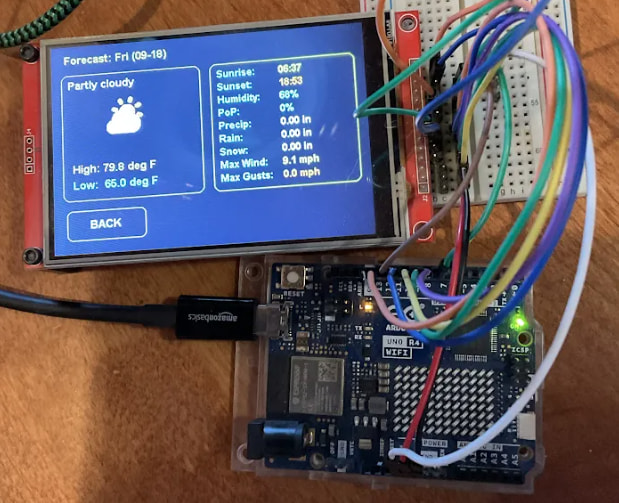
Zephyr Weather Station App Ported from Arduino GIGA R1 to UNO R4 WiFi
Arduino Forum users KurtE and Merlin513 demonstrated that their ZephyrOS weather station application, originally built for the GIGA R1 WiFi with a touchscreen, can also run on the more constrained UNO R4 WiFi. The port targets a board with a 48 MHz single-core Renesas RA4M1, 32 kB of RAM and 256 kB of flash, versus the GIGA’s 2 MB of flash. To fit, KurtE switched display libraries, simplified the interface, reduced its color palette and minimized image sizes; the article says the smaller package also addressed RAM use. The application presents local weather with touch-selectable daily details, and KurtE described its UNO R4 operation as “reasonably well.” The post points to Arduino Core on Zephyr 0.90.0 as officially stable, but supplies no benchmark data or quantified memory and performance results for the port.
The concrete update is a demonstrated Zephyr weather-app port using display and asset reductions; its performance is only described as “reasonably well,” with no quantified test results.
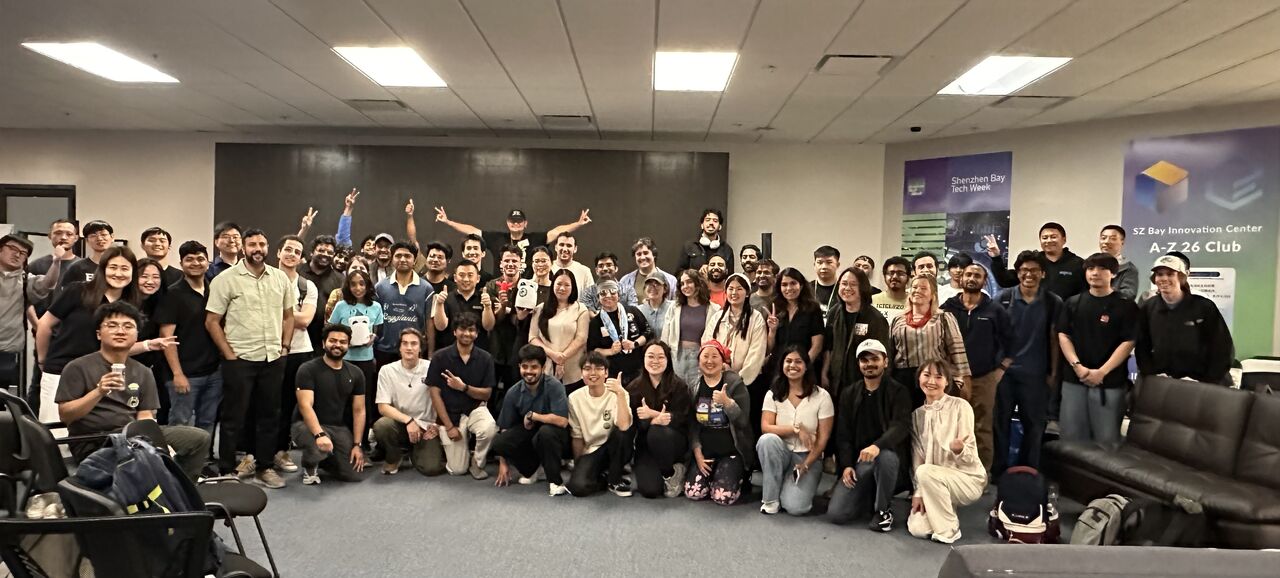
Seeed’s September Roundup Highlights Robotics Guides, Hardware Updates and Community Projects
Seeed Studio’s September 2026 roundup gathers company news, technical material, product showcases and community projects rather than announcing one central launch. Highlights include Seeed’s new Santa Clara hub, availability of its products through Micro Center in the US, and workshops and events focused on robotics and TinyML. The technical guides cover mobile-robot development, a beginner course for Physical AI, Matter and Zigbee support for the XIAO MG24 through Silicon Labs Arduino Core 5.0, and experimental Debian 13 support for reCamera Pro; the Debian image is not standard firmware. Featured hardware includes a five-in-one environmental sensor with 4G, solar charging and RS485 expansion, and Wi-Fi-equipped XIAO IPS Display boards in three sizes. The roundup also describes a cloud workflow for robot training and projects involving wildlife monitoring, aquaculture, smart glasses and voice-controlled robotics. Most items are summaries linking to separate stories, and the article provides no independent performance validation.
The roundup gives concrete hardware, software and robotics updates, including key sensor and display features, but combines many separate items and offers little independent validation.