

All updates
2026

Adafruit Showcases Pepper’s Ghost Monster Eyes and a Floating Ghost 3D Print
Adafruit’s weekly 3D Hangouts post highlights a Pepper’s Ghost monster-eye project and revisits its Marquee display, alongside a time-lapse featuring a floating ghost dog model by O3D. The post links to guides for the Pepper’s Ghost effect and Adafruit Monster Eyes, and lists hardware including the Qualia ESP32-S3, a 2.1-inch round TFT, and a 2.9-inch MagTag e-ink display. It also points readers to community-made 3D printing projects and describes how printed enclosures, brackets, and sculptures can be combined with electronics. The material is a roundup of existing guides, components, and community work; it does not announce a new product or provide performance tests or detailed build instructions in the article itself.
This is a relevant hardware-and-making roundup, but its main value is links to existing guides and a showcased 3D model; no new product or independently verified technical result is reported.
Adafruit Guide Builds a Pepper’s Ghost Monster Eye with Qualia ESP32-S3
Adafruit’s new project guide demonstrates a desktop Pepper’s Ghost effect built around its Qualia ESP32-S3 and a 2.1-inch round TFT display. The animated “Monster Eye” illusion is assembled inside the Adafruit DIY Snow Globe Kit, with a 3D-printed enclosure holding the electronics and a clear plastic reflector that builders can cut themselves. The material identifies the main components and points readers to the full guide, but does not provide details about software requirements, build time, cost, or testing. This is a reproducible maker-project example rather than a new hardware release or evidence of a broader change in product capability.
The guide offers a concrete, reusable microcontroller-and-display build for hardware makers; its scope is a single DIY project, with no reported performance testing or broader technical advance.

Lxa Brings AmigaOS Applications to Linux Without Amiga Hardware
Guenter Bartsch has published lxa, an MIT-licensed Linux compatibility layer for running AmigaOS executables. It combines a 68000 CPU emulator with AmigaOS library implementations and bridges system calls to Linux file and I/O operations. The project targets OS-compliant applications rather than hardware-specific software: it does not emulate ECS or AGA chip registers, and uses RTG with Picasso96 for graphics. Its stated aim is to support Amiga development and productivity software on Linux PCs and Raspberry Pi systems without an Amiga machine. Development is checked against an AmigaOS 3.1 reference system using a twin runner that compares Intuition trees, pixel snapshots and text output. The project reports that all 9,932 executables in the Fred Fish collection have been run under lxa. Version 0.11.28 completes milestone M2, with GELs, copper lists, PaletteExtra and library versions reported as matching AmigaOS 3.1; the supplied material does not establish broader compatibility or independently verify performance.
Lxa is a concrete open-source compatibility project with a reference-machine comparison process and a reported 9,932-program run. Its scope excludes ECS/AGA hardware emulation, and the compatibility claims are project-reported.
Adafruit Highlights a 3D-Printed Floating Ghost Dog Tealight Holder
Adafruit’s weekly #3DThursday feature showcases O3D’s “Floating Ghost Dog,” a Halloween-themed tealight holder listed on MakerWorld. The post reports a print made on a Bambu X1C using PolyMaker PLA: 110 × 94 × 74 mm, 36 g of filament, and a print time of 2 hours 18 minutes. Its stated settings are a 0.2 mm layer height, 0.4 mm nozzle, 10% infill, 1 mm retraction, and temperatures of 200°C for the nozzle and 60°C for the bed; it also lists a print speed of 230 mm/s. The article describes the weekly community showcase but does not provide independent testing, print-quality evidence, or further details about the model’s design or operation.
This is a relevant, concrete 3D-print example with dimensions, material, print time, and slicer settings; its value is limited to a community showcase rather than a new printer or validated performance result.

3D-Printed Desk Cable Organizer Uses Rotating Snap-Latch Tubes
Maker mgm86 has shared a desk-mounted cable organizer designed to keep frequently used leads accessible on the desktop. The holder is offered in configurations with three, five or seven tubes; each tube rotates 180 degrees to open or close and uses a snap latch. The body pushes onto a base, and the tubes can be removed and replaced. It attaches with double-sided adhesive tape, with the designer recommending masking tape underneath for sensitive surfaces. The post also describes a May 2026 V2 with an improved spring mechanism said to work with all filament types, and notes that the multicolor design can be printed without an AMS system. The material describes a community-shared 3D-printable design, not independently tested durability or performance.
This is a concrete, printable hardware design with useful configuration and mounting details, but it is a narrow community project and its spring and compatibility claims are not independently verified.

LegalOn Reports 65% Lower Estimated Daily Codex Costs After Model-Routing Changes
LegalOn Technologies says it reduced estimated daily Codex costs by about 65% compared with its earlier use of GPT-5.5, while maintaining development speed. The company introduced task-based selection among GPT-6 Luna for clearly specified implementation work, GPT-6.1 Sol for standard design and analysis, and GPT-6 Astra for more complex judgment such as architecture. It also restricted Fast mode by default and set usage caps for departments, groups, and individuals, with budgets tailored to business maturity: established operations targeted roughly 20% greater cost efficiency, while newer ventures received room to invest in AI use. LegalOn attributes the overall reduction to these combined measures and says teams used practices such as parallel task execution to sustain performance. The figures are company-reported estimates, not independent benchmark results. Its planned feature-level metric linking AI costs to customer value is still being built.
The account gives a concrete company-reported cost reduction and describes model routing and budget controls; the 65% figure is an estimate, with no independent validation, and the ROI metric remains in development.
Maker Fits an IR Smart Remote Into a Real Walnut Shell
A maker built a phone-controlled infrared remote inside a real walnut shell using a Seeed XIAO ESP32-C3, IR LEDs and a battery. The post says it can learn IR remotes and be controlled from home or remotely; it provides no test details or performance evidence.
The post describes a concrete, distinctive hardware build and its stated functions, but offers no implementation details or independent evidence for remote-control performance.

Maker Shares a Dual-Color 3D-Printable Spider and Web Halloween Decoration
Maker rajmaks shared a 3D-printable Halloween spider-and-web decoration measuring 250 × 125 × 2 mm. The described build uses black and red PLA, printed across three plates with a 0.2 mm first layer and 0.08 mm subsequent layers; the stated total print time is about 1.1 hours. The red PLA element attaches to the spider without adhesive, while double-sided tape is suggested for fixing the web to a surface. An extra plate provides spiders designed for fridge mounting, with holes sized for 8 × 1.5 mm magnets. Bambu support filament or PETG is recommended for support material. The article points readers to the model files on MakerWorld; it reports a community project rather than a new printer, material, or independently tested performance result.
This is a specific, usable 3D-printable design with dimensions, print settings and an optional magnet-mounted variant, but it is a narrow seasonal maker project rather than a broader hardware development.
ESP32-S3 DOOM Console Fits Inside a TV Antenna Plug
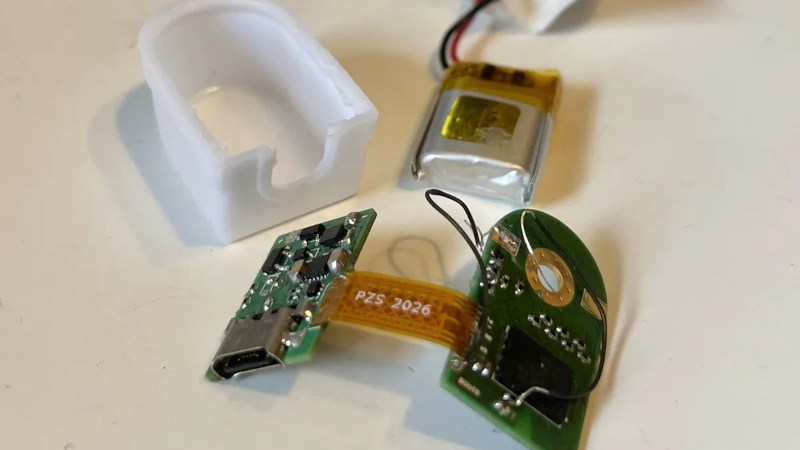
RayTriangle has built a miniature TV game console that runs DOOM and fits, including its battery, inside a screw-terminal antenna plug originally used to match balanced feeder to coaxial cable. The device uses an ESP32-S3 and connects to a controller over Bluetooth. To produce video, it generates phase-shifted chroma waveforms from a lookup table, combines them through a resistor-ladder DAC, and modulates the resulting composite signal onto a carrier from the chip’s clock generator. The two circuit boards sit on opposite sides of the battery and are linked by a flexible PCB. In the demonstration, the picture is noisy, and the design targets PAL televisions with VHF tuners; support for UHF or NTSC is only suggested as a possible extension, not demonstrated. The project’s notable achievement is its compact packaging and unusual signal-generation approach, rather than a broadly usable modern console.
A specific, unusually compact ESP32-S3 build demonstrates DOOM over analog TV RF, but the displayed image is noisy and PAL/VHF is the stated target; other formats are unverified.

3D-Printed Halloween Pumpkin Uses a Scotch Yoke to Open Its Mouth
Maker shamix3d has shared a 3D-printable Halloween pumpkin lantern whose mouth opens when the user rotates both hands. Its Scotch yoke mechanism converts that rotary input into linear motion. The model is arranged across two print plates: one for the pumpkin components and another for a light diffuser and head lifter. The listing says it is compatible with a range of Bambu Lab printers, including P1-, X1-, A1- and H-series models, and estimates print time at 3.4–4.6 hours. An assembly guide is included, and the design can accommodate a tealight or LED light. The supplied material describes a downloadable maker design, not a commercial product launch or independently tested performance.
This is a concrete, downloadable 3D-printing design with a described mechanism and build details; its significance is limited to a seasonal maker project, with no independent testing reported.
Arduino Reports UNO Q’s First-Year Shipments and Expanding Developer Ecosystem
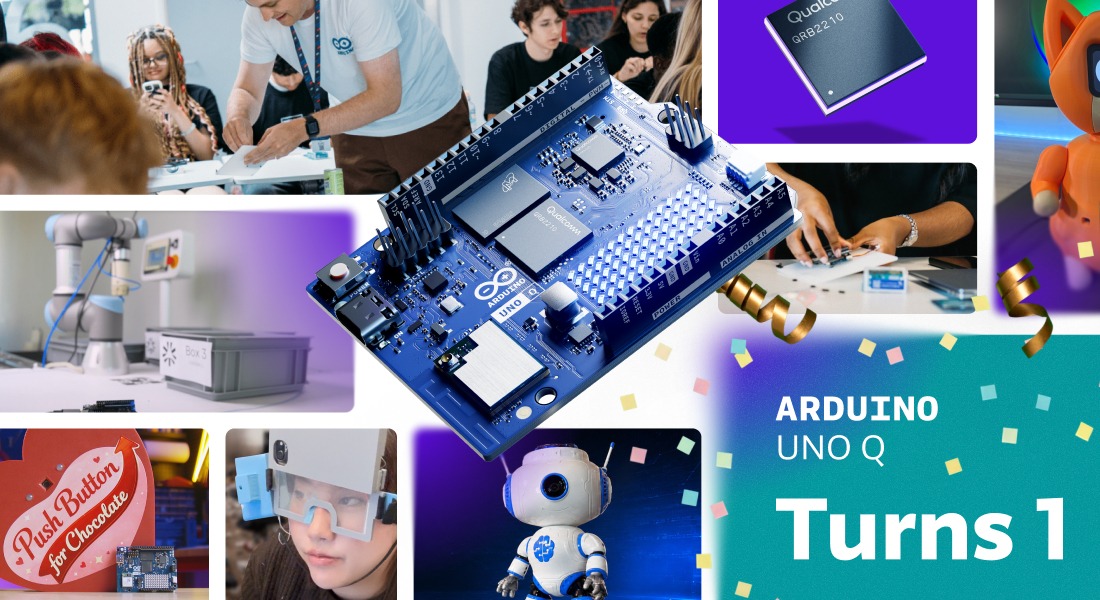
Arduino’s one-year retrospective says more than 270,000 UNO Q boards had shipped worldwide by September 29, 2026, alongside 400-plus events, over 4,000 contest participants and more than 850 forum topics. The company also reports year-on-year growth in Project Hub projects and Arduino library downloads, which reached 244 million in the past 12 months, versus 165 million the year before; Arduino IDE downloads reached 35 million. The post recaps UNO Q’s combination of a Qualcomm Dragonwing QRB2210 Linux-capable processor with AI acceleration and an STM32U585 real-time microcontroller, plus the App Lab workflow pairing Arduino sketches with Python applications. Arduino says App Lab is on GitHub and describes software, partner and deployment pathways intended to help move projects toward production. These are company-reported adoption figures and claims, not independently audited measures; the article is a retrospective rather than a new product announcement.
The post provides concrete company-reported UNO Q shipment and ecosystem figures and recaps its dual-processor design; adoption data are not independently verified, and no new product is announced.
Seeed Shares an Open-Source Modular System for Reusable PCBA Testing
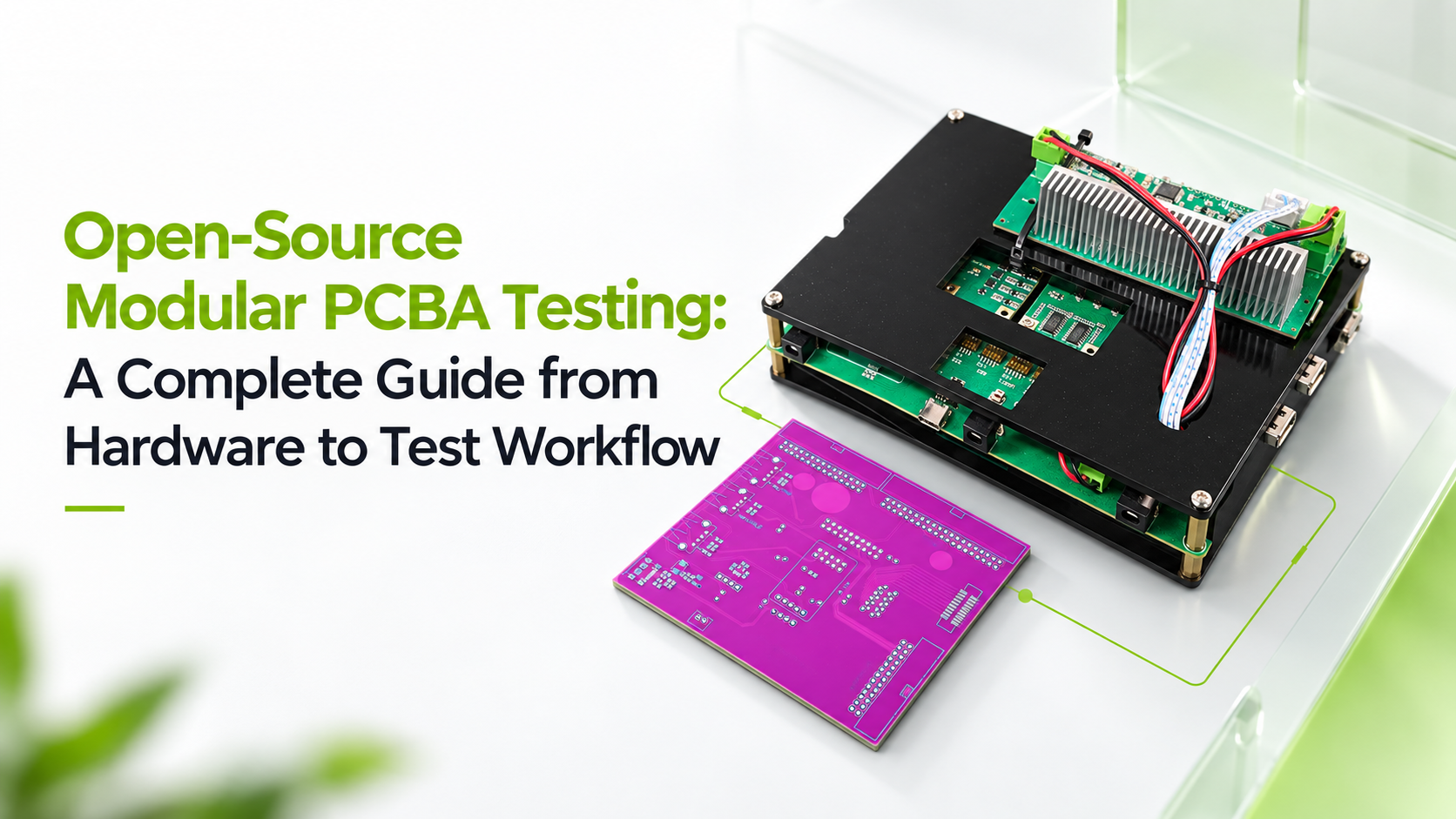
Seeed describes an open-source reference architecture intended to make functional testing reusable across different PCB assemblies. It separates a universal test box, a product-specific adapter board and configurable test software: the box supplies shared resources such as UART, RS485, USB, ADC, GPIO, I²C, power control and programming interfaces, while the adapter maps each board’s signals to those resources. The accompanying software framework handles test sequencing, communication, firmware programming, validation and logging, with product-specific workflows configured through INI files; the article also says a newer version supports drag-and-drop configuration. A reference project for the reSpeaker Flex XVF3800 Core Board with XIAO illustrates test planning, adapter design and a workflow covering initialization, board identification, firmware flashing, checks and shutdown. The article presents this as a guide and reference for building similar systems, not as independently measured evidence of cost or throughput improvements. It notes that Seeed uses an internal production test application; no production-scale results are provided.
This is a practical, open-source hardware-and-software testing reference with a detailed board example. Its claimed reuse benefits are not supported by comparative cost, throughput, or production-scale measurements.

Maker Shares Modular 3D-Printed Enclosure for ESP32 Cheap Yellow Display
Maker Master_Of_None has shared files for a modular handheld enclosure built around an ESP32-based Cheap Yellow Display. The design provides room for four 18650 cells, a power-bank board, multiple SMA antenna connectors, and modules including GPS, NFC, infrared, 315/433 MHz RF, CC1101, NRF24L01, and a speaker. The accompanying description says it is intended to support wiring, expansion, and experimentation, and includes suggested module placement and wiring guidance. PETG-CF is recommended with 0.2 mm layers and 25–30% infill. The material describes a community design and its proposed configuration; it does not report independent testing, measured performance, or whether the enclosure has been validated with every listed module.
The shared design and fabrication guidance offer a concrete, adaptable enclosure for ESP32-CYD builders, but the item is a maker project, not a validated product or performance report.

Printable Cat Castle Model Is Designed for 220 mm Build-Volume Printers
Adafruit highlights a 3D-printed cat-house model shared by BenBurnski. The design is split into multiple individual parts and is described as printable on a machine with a minimum build volume of 220 × 220 × 220 mm. The article links to downloadable model files on Printables. It does not provide details about the model’s dimensions, assembly, materials, print settings, testing, or whether the stated printer-volume requirement has been independently verified; the post presents it as a community project rather than a newly released printer or component.
This is a usable 3D-printing project with a stated minimum build volume and downloadable files, but the article offers little design detail or validation and reports no broader hardware advance.
2026

NVIDIA and Microsoft Bring Local AI Hardware and Agent Security to Windows
NVIDIA and Microsoft used a San Francisco event to describe a Windows-focused push for local AI agents, combining Microsoft’s operating-system infrastructure with NVIDIA-powered PCs. Microsoft announced general availability of Microsoft Execution Containers, a Windows-level mechanism intended to let agents run persistently in the background under OS control, with security, observation and governance features. NVIDIA said RTX Spark laptops are open for preorder and will be available October 16, while compact desktops are expected in November; announced systems are planned from Acer, ASUS, Dell, HP, Lenovo, Microsoft, MSI and Gigabyte. The stated top configuration includes a Blackwell GPU, a Grace CPU, up to 128GB of unified memory and up to one petaflop of FP4 AI performance. Microsoft also previewed DGX Station for Windows, based on the GB300 Grace Blackwell Ultra Desktop Superchip, with claimed 748GB coherent memory and up to 20 petaflops of FP4 compute; availability timing was not given. Performance and model-capability claims in the announcement are vendor statements, not independently verified results.
The event pairs a generally available Windows agent-execution feature with announced local-AI PCs and a previewed Windows DGX system. Hardware performance figures are company claims, and DGX Station has no stated availability date.
OpenAI Says GPT-6 and Intelligent UI Are Rolling Out in ChatGPT
OpenAI says GPT-6 and Intelligent UI are rolling out to everyone in ChatGPT. It describes the interface as providing visual, interactive answers and task-specific tools, but gives no rollout details or evidence for these claimed capabilities.
The post announces a broad ChatGPT rollout and describes intended interface features, a concrete AI product update. It provides no technical specifications, availability details, or independent evidence for the claimed benefits.
Liquid AI Releases Open d1 Decision Models for Multimodal Edge Inference
Liquid AI has released two open-weight decision models: d1-3B, built on its LFM2.5-VL-3B backbone for text and image inputs, and d1-omni-600M, built on an encoder backbone for text plus either image or audio. Unlike generative models that emit tokens, the company says these models return decisions in a single forward pass. On seven public text-oriented datasets, Liquid AI reports mean scores of 82.9 for d1-3B and 78.4 for d1-omni-600M, compared with 81.1 for Decider 4B and 77.1 for Decider 2B, respectively. Its tests put d1-3B question latency at 16 ms on Jetson AGX Thor, 26 ms on Jetson AGX Orin 64 GB, and 50 ms on Jetson Orin Nano; reported GPU results are 8 ms on RTX 4090 and 9 ms on AMD MI325X. These are company-reported benchmarks, not independent validation. The smaller model is an early research release with no reported speed figures, and the article provides no vision or audio benchmark results. Both models are available as open weights on Hugging Face.
This is a substantive open-model release with reported benchmark and edge-latency results; evidence is company-reported, and the 600M model remains early-stage without speed or vision/audio benchmarks.
2026
NVIDIA Details Open-Model Strategy and Telecom Fine-Tuning Recipe
NVIDIA’s telecommunications blog argues that open models are gaining strategic importance for operators, citing its latest State of AI in Telecommunications report, in which 89% of respondents said open-source models and software matter to their AI strategy. The post highlights a 30-billion-parameter Nemotron 3 Large Telco Model, fine-tuned by AdaptKey on open telecom datasets for tasks such as network configuration and customer incident triage. NVIDIA also says it has released an end-to-end NeMo fine-tuning recipe for adapting open models with operator-specific data. SoftBank describes using open models, including Nemotron, in its telecom-focused model work, while AT&T emphasizes choosing models by workload. The article presents cost, customization, governance, deployment flexibility and local services as benefits, but offers no independent performance results or detailed methodology for the model’s claimed accuracy gains.
The concrete additions are a 30B telecom-tuned model and a publicly described fine-tuning recipe; the article’s accuracy claims lack supporting metrics, and much of the piece is NVIDIA’s strategic advocacy.
2026
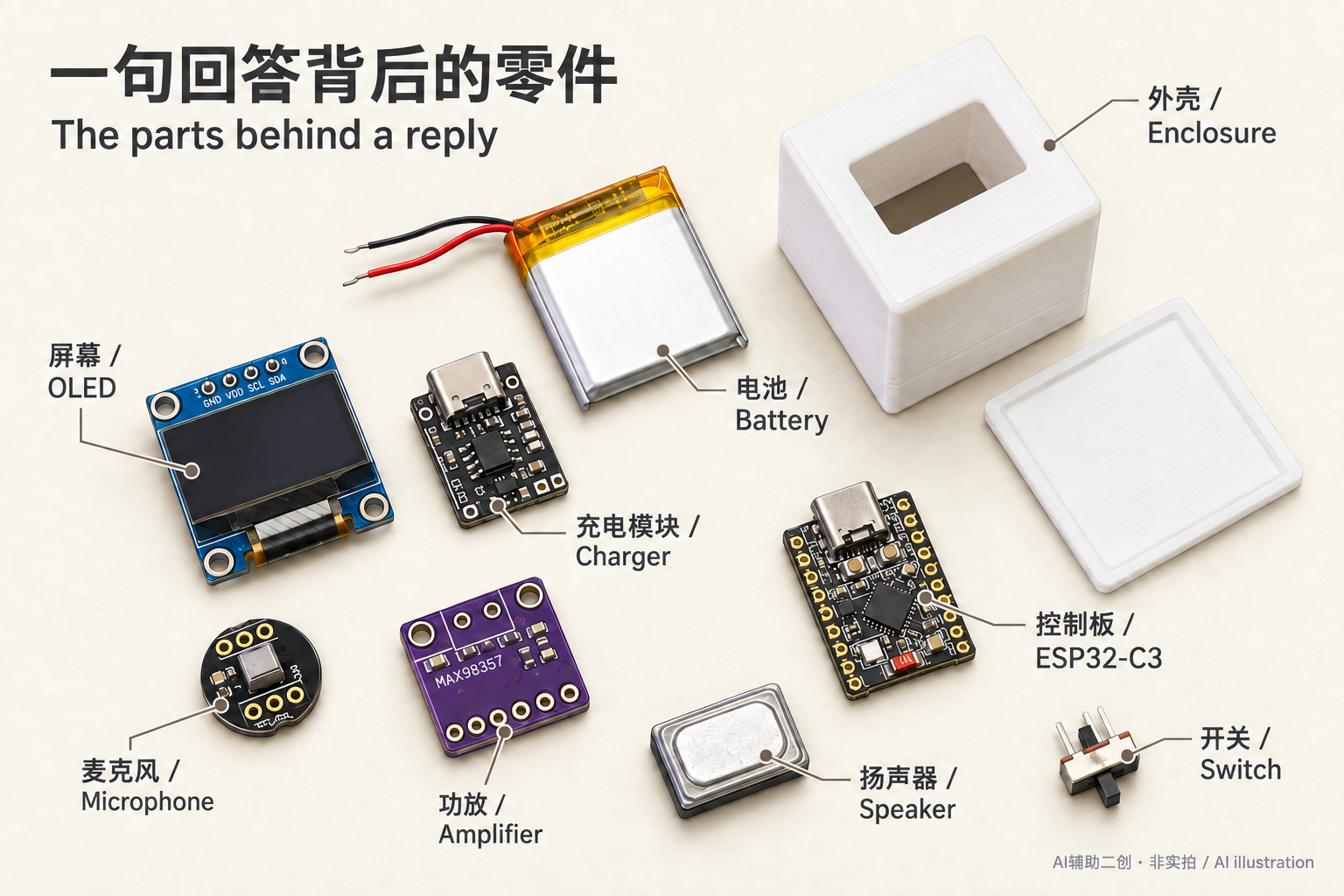
My First Upgrade for This Chatbot Might Be “Say Less”
“Tell me about yourself.”I can already picture the little box answering earnestly while I crouch beside the desk, grinning. A moment ea…
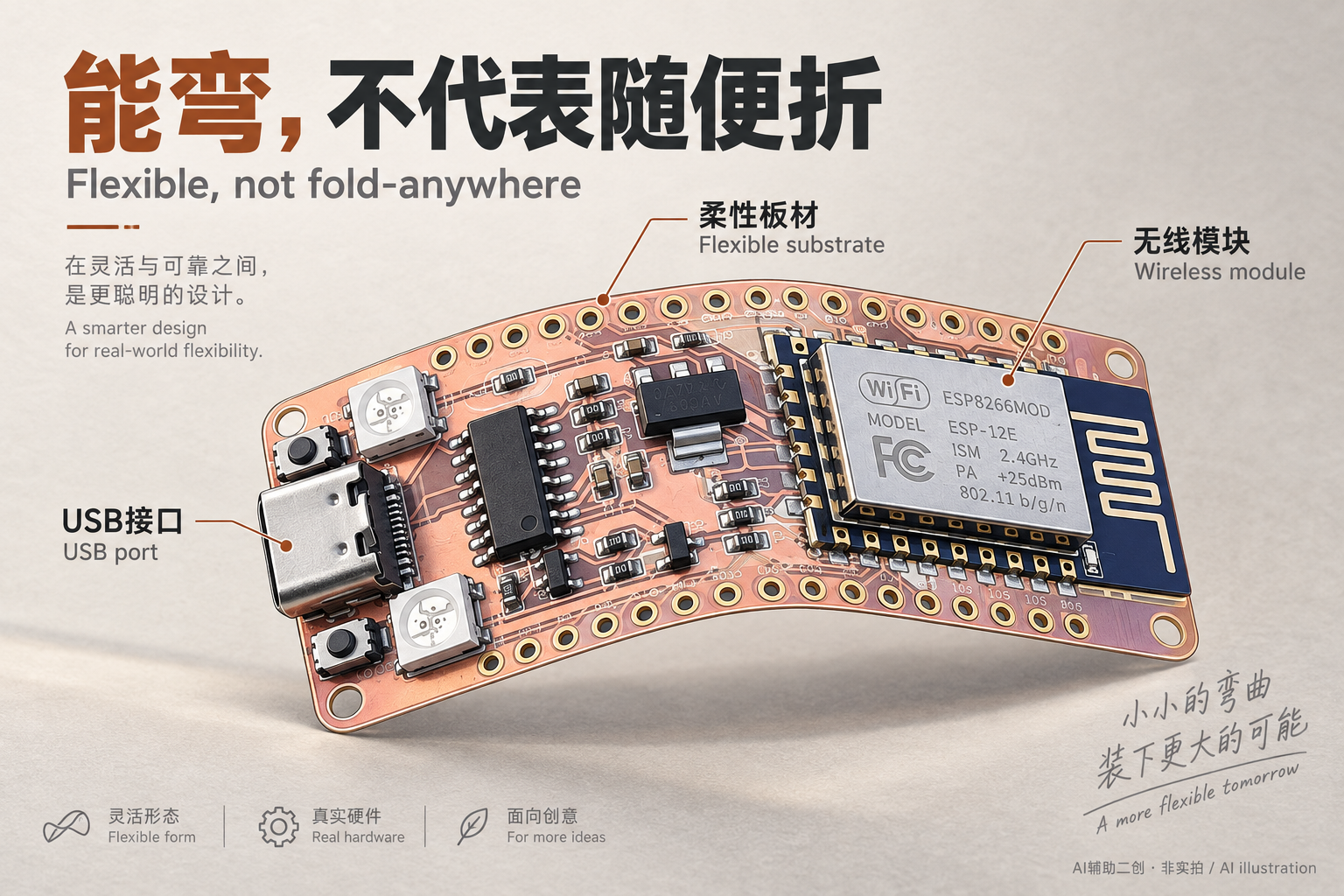
Wait—Could This Board Finally Fit Inside a Round Case?
Hang on. Stop bending it for a second. Let me see the USB end.This photograph of a curved NodeMCU board makes me curious and nervous at…