

My First Upgrade for This Chatbot Might Be “Say Less”
“Tell me about yourself.”
I can already picture the little box answering earnestly while I crouch beside the desk, grinning. A moment earlier, it would have been a few boards, a speaker and a case that wasn't closed. Hearing even “hello” come out of something I'd assembled would probably be enough to make me record it for a friend.
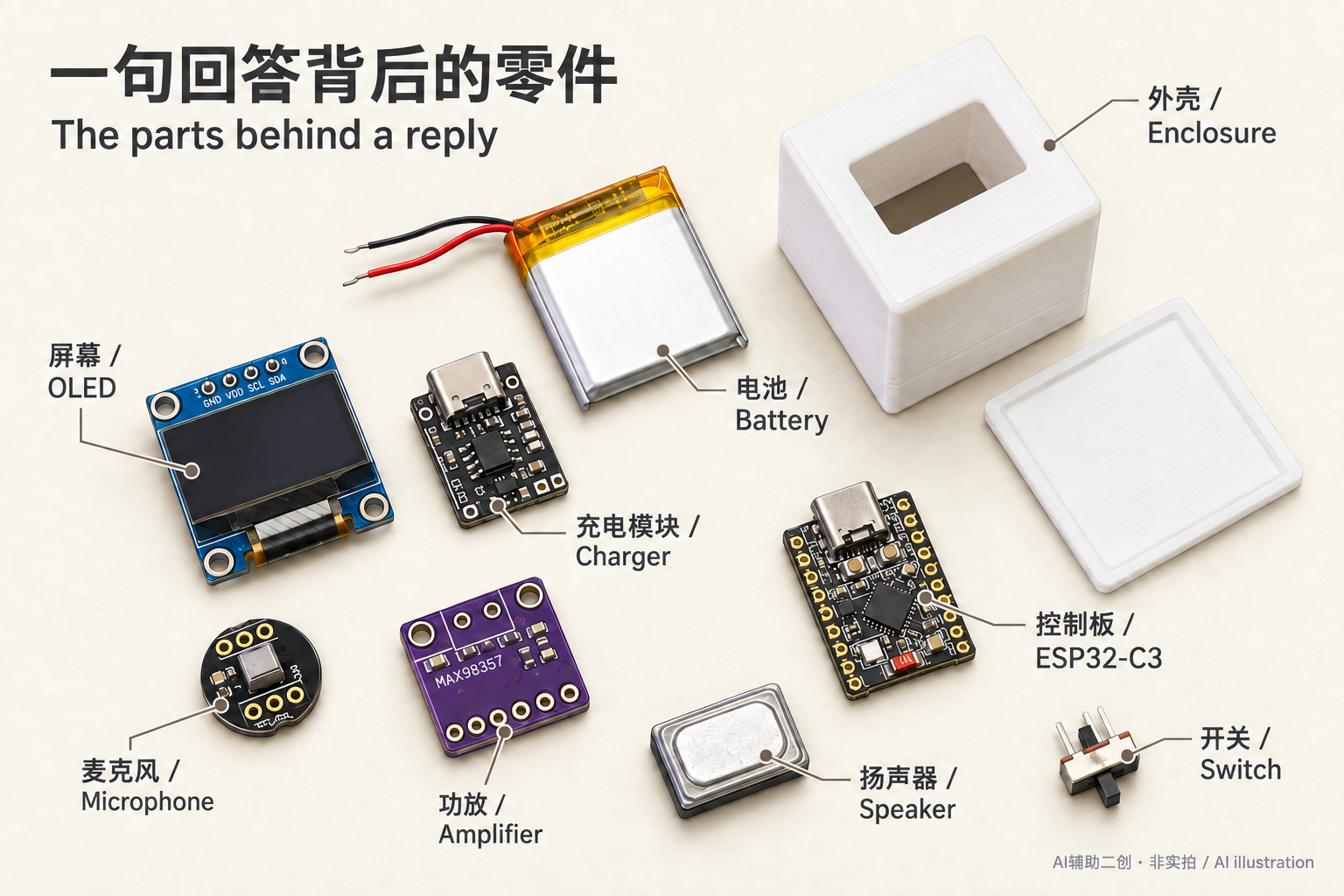
Edison Science Corner's parts photograph makes that temptation very real. A white enclosure with visible print lines, a small screen, an ESP32-C3 board, a microphone, an amplifier, a battery—all laid out separately. They match the creator's kit list. I'd still need proper instructions, but at least there are recognizable pieces to start with.
For my first version, no legs. No robot arm. Getting the case closed, the voice audible and the text readable without leaning in would be worth celebrating. I could choose a name early, though. That would give me something to mutter at when the programming got frustrating.
I'd want it beside the soldering station. Maybe to explain an unfamiliar English abbreviation, or answer a simple question when my hands were occupied. For wiring and voltages, I'd still check the documentation. An apology from a chatbot wouldn't replace a damaged board.
I would also want to make its answers shorter. Properly shorter. Ask one question and get a lecture covering the background, the wider implications and the future, and the joint I'm working on could be cold before it reaches the useful part.
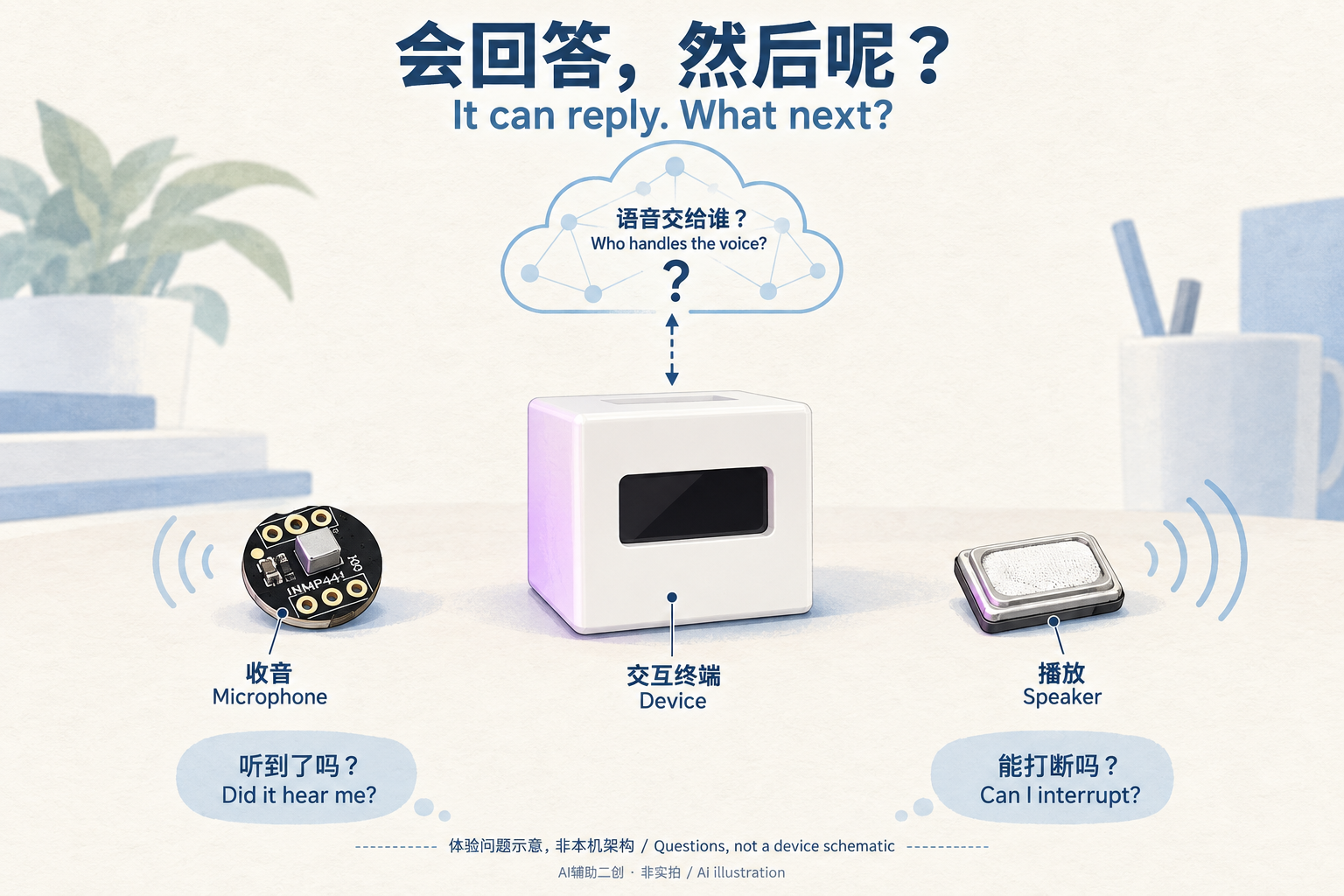
A clear listening indicator would help. When nothing happens, I'd like to know whether to repeat myself or wait. Being able to interrupt would be better still: realize you've asked the wrong question halfway through, and you don't want to sit through the entire answer. Whether those changes are possible depends on the software and service. Having all the parts doesn't mean having all the features.
What really appeals to me is gradually making it suit the desk. Change the startup screen one day. Enlarge the text the next. Print a nicer case when I feel like it. It doesn't have to begin as an assistant that can do everything.
First, get one clear sentence out of it. Then I'd probably call a friend over and say, “Ask it something else. Honestly, it was answering a minute ago.”
Comments & answers 0