

All updates
2026

Hackathon Team Tries to Teach a uFactory Robot Arm to Juggle
Mandy Meindersma, Jie Xuan Tang and Aika K explored whether a uFactory robot arm could juggle, as a project from Viam’s Fine Motor Skills Hackathon in September 2026. The article describes a challenge in moving from the arm’s precision-oriented use to fast, ballistic motion and reports the team’s own assessment: the task was much harder than expected. The project code is available on GitHub for inspection. The supplied material does not provide details about the robot model, juggling setup, control method, successful performance, measurements or repeatability, so it does not establish that the arm achieved reliable juggling or quantify its capabilities.
This is a relevant hands-on robotics project with code available, but the material offers no implementation details or evidence that reliable juggling was achieved.

NVIDIA Announces Planned Investments in Four French AI and Technology Startups
NVIDIA says it has announced planned investments in four companies in France: healthcare technology firm Doctolib, materials-discovery startup Entalpic, robotics developer Genesis AI and business-planning software company Pigment. The announcement is part of a broader account of French deployments using NVIDIA technology, rather than a detailed investment disclosure: it gives no amounts, terms or closing timelines for the four planned investments. The post also describes Bull’s plan to extend European AI server production to Vera Rubin Ultra NVL72 systems in 2028, and reports that Altair-1, a satellite using NVIDIA Jetson AGX Orin modules, has reached orbit. Other examples include a public-sector digital twin that the article says has reduced operating costs by 10%, and marketplace catalog processing that it says takes under two hours. These are company-reported examples; the material does not provide independent validation or comparable methodology for the performance claims.
The concrete news is planned investment in four France-based companies, alongside examples of deployments; investment amounts and terms are undisclosed, and performance figures are company-reported.
2026
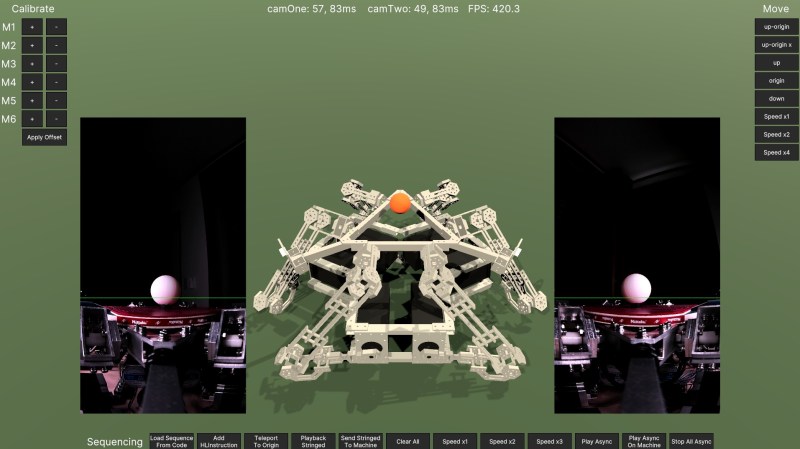
Hexa-Bouncer Uses Six Steppers and Vision to Keep a Ping-Pong Ball in Play
T-Kuhn’s hexa-bouncer is a custom Stewart-platform robot built to bounce a ping-pong ball, using six stepper motors with planetary gearboxes to move and orient a paddle. A Teensy 4.0 coordinates the motors, while a PC runs a Unity application that performs inverse kinematics and uses two cameras to track the ball in 3D; the application is available on GitHub. The mechanical assembly is largely CNC-milled aluminum, with more than 300 pieces overall and 27 machined parts for each arm. The article describes the build and points to video of it in operation, but gives no measured performance results. It also notes that the vision workflow builds on the creator’s earlier octo-bounce robot.
This is a concrete, unusually elaborate robotics project with a GitHub application and a described vision-and-control setup; the article offers no quantified performance validation.
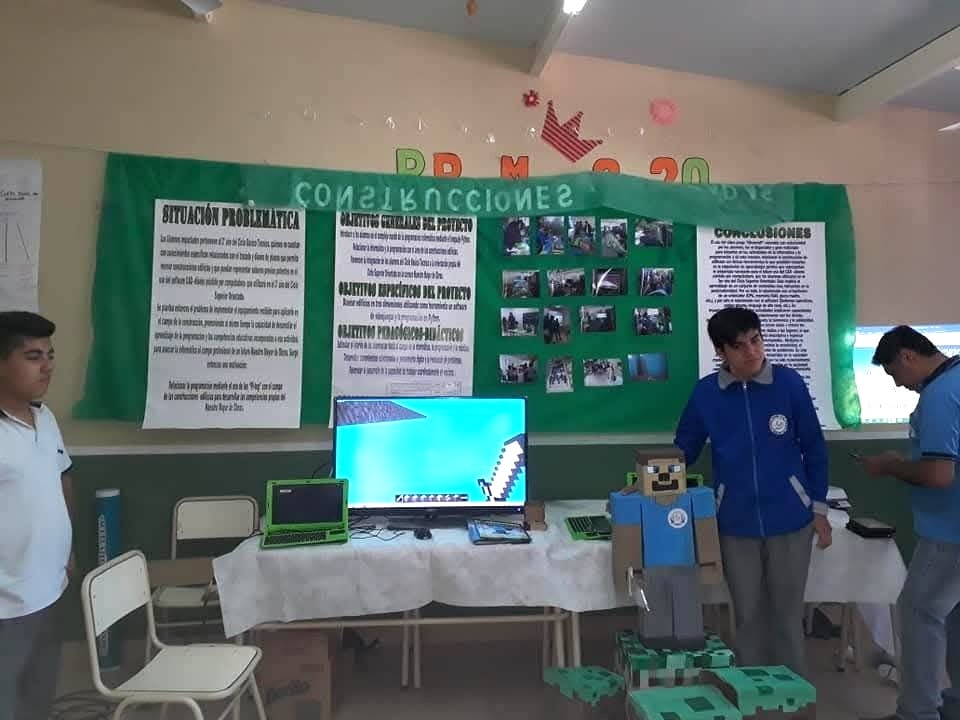
Teacher-Led Raspberry Pi Workshops Bring Coding and Robotics to Rural Argentina
Eliana Otrera, a teacher in Forres, Santiago del Estero, has helped introduce computing activities in rural Argentine schools and organize community Raspberry Jams. She began teaching coding and robotics in rural schools in 2017 through the Conectar Igualdad program, which introduced her to Raspberry Pi through educational Pi-Top computers. After promoting Raspberry Pi among colleagues, she and two collaborators held the province’s first community Raspberry Pi workshop in Forres on 6 March 2020, then continued sessions at schools and community venues in nearby areas. The article describes student work ranging from decorated electronic quiz games and basic robots to Python-and-Minecraft building projects. It also reports that a student greenhouse project has developed toward agricultural applications including irrigation control, drone deployment, and crop planning. These are examples recounted by the teacher; the article provides no independent evaluation, participant numbers, or quantified outcomes.
The article documents a sustained, locally organized computing-education effort and concrete student project examples, but offers no scale data or independent evidence of outcomes.
2026

Ai2 Replaces GPU Priority Queues With Budget-Based Fair-Share Scheduling
Ai2 describes replacing a priority-based scheduler across its GPU clusters with a system that allocates research groups budgets of GPU time, applies hierarchical fair-share scheduling over a default seven-day lookback window, and lets workloads declare a minimum protected runtime before they can be preempted and requeued. The institute says it operates thousands of NVIDIA H100, B200 and B300 GPUs, with submitted demand typically two to three times available capacity. In a 30-day post-rollout period, teams received 98% of the GPU hours they were owed, while cluster occupancy remained at 98%; 18% of delivered GPU time was unallocated, helping maintain occupancy when funded workloads were not ready. On the largest H100 cluster, median queue wait fell from five minutes to 24 seconds and p90 wait from 2.8 hours to 1.8 hours. Human-involved repairs fell 74%. These are Ai2’s reported operational results, not independent measurements. The post also flags a drawback: interactive sessions can be preempted after the eight-hour protected-runtime cap, and the team is investigating possible capacity fragmentation affecting large jobs.
The post reports a deployed scheduling redesign with 30-day allocation, occupancy and latency results; evidence is specific but self-reported, and the team notes session disruptions and possible fragmentation.

Security Researchers Find JIT-Based Spectre-v2 Bypass and Serious Robot Mower Flaws
A security roundup reports research suggesting that self-modifying code in just-in-time compilers can make processors use cached instructions to evade some Spectre-v2 mitigations. Researchers tested the approach against Firefox’s SpiderMonkey JavaScript engine, Linux’s eBPF JIT and GraalVM, finding it feasible in those environments; the article says this demonstrates plausibility, not an immediate widespread exploit, and notes that further mitigation research is needed. The roundup also describes vulnerabilities in Mammotion’s robot lawnmower platform: researchers reported account takeover, exposure of customer data, unauthenticated access to mower camera mode, weak account-recovery protections and hard-coded firmware tokens. They say remotely testable issues appear to have been resolved after disclosure attempts, but the account does not establish that all weaknesses were fixed. Other items cover a large Linux kernel patch list, Google pausing its open-source vulnerability rewards program amid low-quality AI-generated reports, and separate breaches involving Asos, the FBI and domain registrars.
The roundup includes technically specific JIT-based Spectre-v2 research and reported robot-mower security flaws, but the attack is described as plausible rather than widespread, and the mower fixes are not fully confirmed.
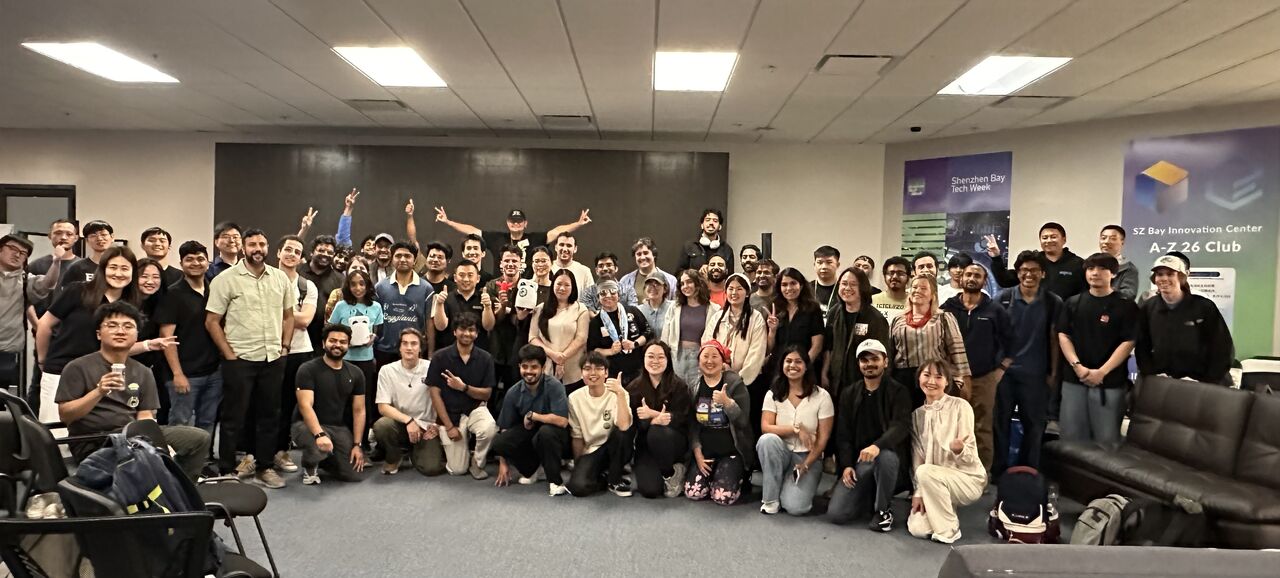
Seeed’s September Roundup Highlights Robotics Guides, Hardware Updates and Community Projects
Seeed Studio’s September 2026 roundup gathers company news, technical material, product showcases and community projects rather than announcing one central launch. Highlights include Seeed’s new Santa Clara hub, availability of its products through Micro Center in the US, and workshops and events focused on robotics and TinyML. The technical guides cover mobile-robot development, a beginner course for Physical AI, Matter and Zigbee support for the XIAO MG24 through Silicon Labs Arduino Core 5.0, and experimental Debian 13 support for reCamera Pro; the Debian image is not standard firmware. Featured hardware includes a five-in-one environmental sensor with 4G, solar charging and RS485 expansion, and Wi-Fi-equipped XIAO IPS Display boards in three sizes. The roundup also describes a cloud workflow for robot training and projects involving wildlife monitoring, aquaculture, smart glasses and voice-controlled robotics. Most items are summaries linking to separate stories, and the article provides no independent performance validation.
The roundup gives concrete hardware, software and robotics updates, including key sensor and display features, but combines many separate items and offers little independent validation.
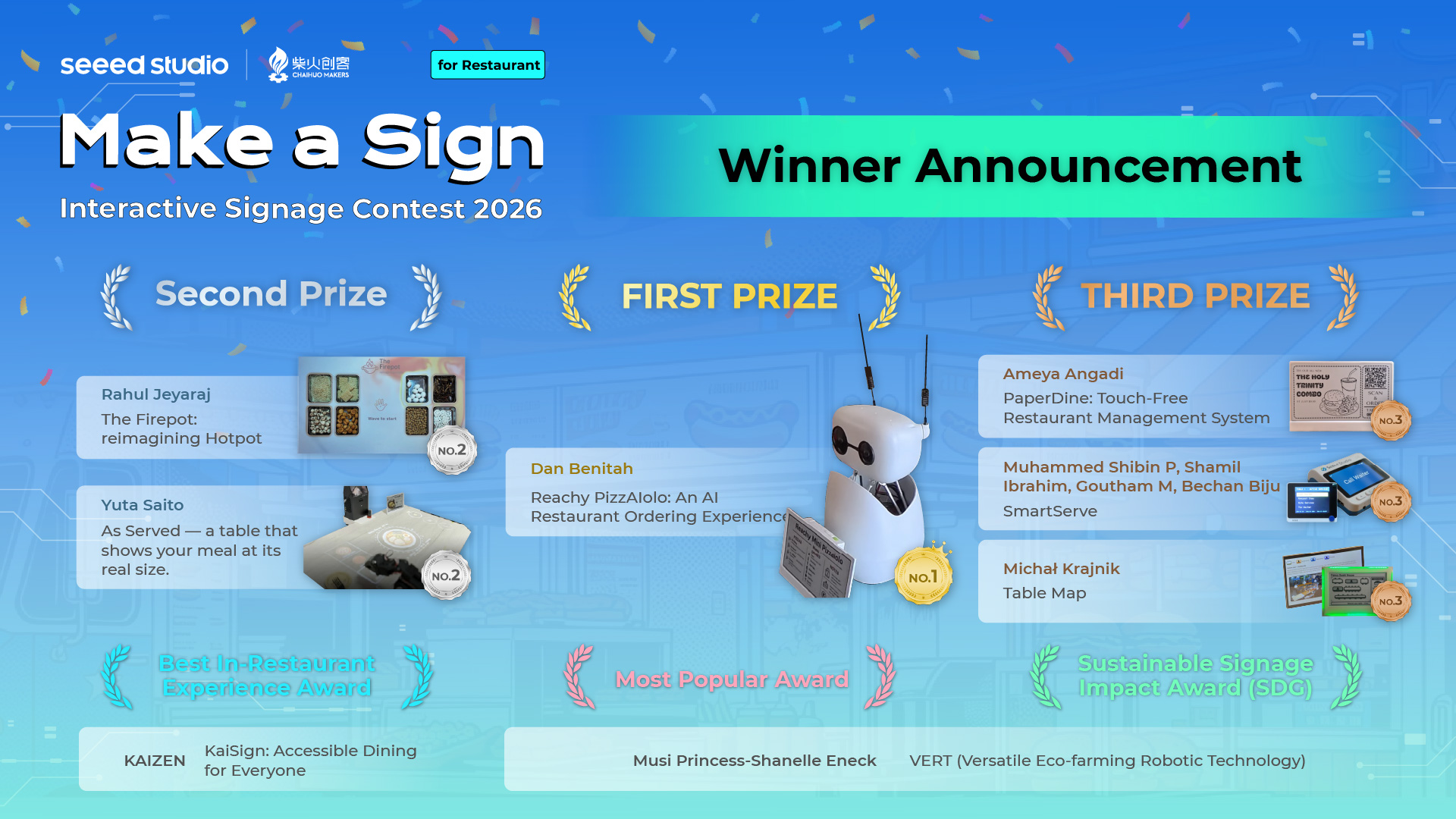
Seeed Names Nine Winners of Its 2026 Interactive Signage Contest
Seeed Studio reports that its second Interactive Signage Contest drew 156 makers from 23 countries and selected 121 qualified projects, with nine winning projects spanning restaurant ordering, accessibility, sustainability and other applications. First prize went to Reachy PizzAIolo, a prototype pairing Reachy Mini Lite with a reTerminal E1003 for voice-based ordering, live order review and handoff to restaurant staff; the article says it was also used at a pizza party. Other projects include a real-size projected menu with a robotic utensil arm, a hotpot counter using eight load cells for live pricing, touch-free restaurant tools, an AI-based table map, accessible ordering through touch, ASL and voice, and an automated greenhouse. These are contest project descriptions, not independent evaluations or evidence of commercial deployment. The company says the winners are planned for display at Maker Faire Shenzhen on December 12–13, 2026, and that it will support selected projects as they develop.
The concrete news is the contest’s nine selected projects, including a voice-ordering prototype and several hardware-based systems. Claims are organizer descriptions; broader deployment and performance are not independently established.
2026
NVIDIA Showcases AI Agents Building Omniverse Simulations for Robotics and AV Testing
NVIDIA describes developer experiments using frontier AI agents with Omniverse libraries to assemble and revise simulation applications through natural-language direction and human review. Examples include a humanoid warehouse simulator, an autonomous-driving workflow built around a Market Street scene, digital twins refined by comparing simulated camera and LiDAR outputs with recordings, and simulated robot sports and disassembly tasks. The article also shows agents helping create a browser-based International Space Station model and an editable room from camera captures. NVIDIA reports that a simulated Unitree G1 cleared one hurdle in 64 of 100 trials; another guided workflow took about three days to create or improve digital twins. These are company-described prototypes and experiments, not independent evaluations or evidence of production deployment. The material illustrates workflows combining models such as Astra and Claude Fable 5 with Omniverse tools, OpenUSD, Isaac Sim and other components, while developers direct the agents, assess results and make corrections.
The article documents concrete agent-assisted simulation prototypes and one reported 64/100 hurdle result, but presents NVIDIA-led experiments without independent validation or evidence of production deployment.
Arduino Reports UNO Q’s First-Year Shipments and Expanding Developer Ecosystem
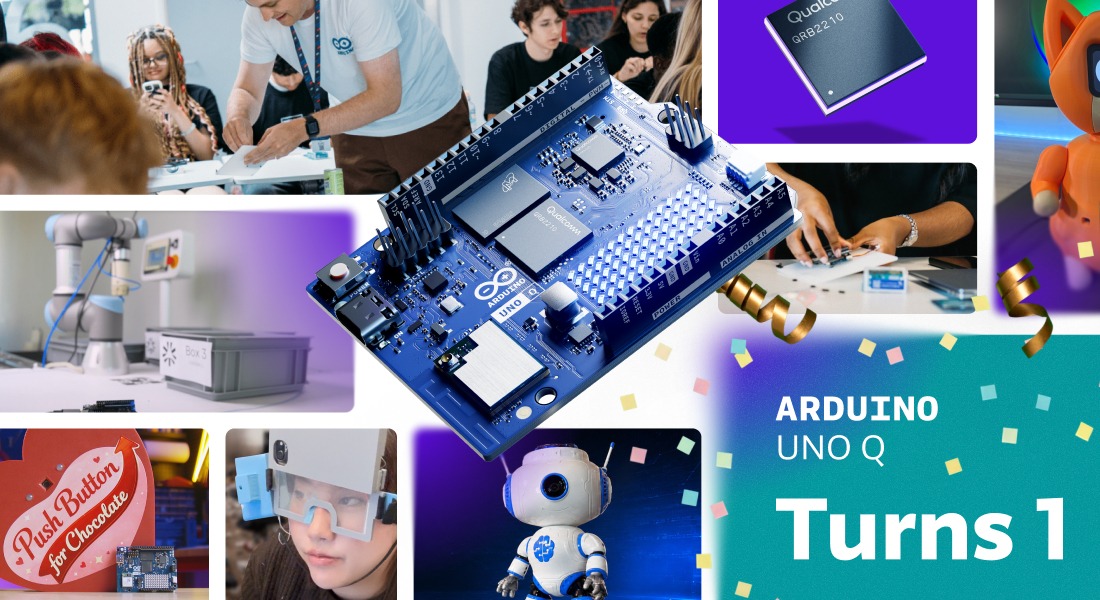
Arduino’s one-year retrospective says more than 270,000 UNO Q boards had shipped worldwide by September 29, 2026, alongside 400-plus events, over 4,000 contest participants and more than 850 forum topics. The company also reports year-on-year growth in Project Hub projects and Arduino library downloads, which reached 244 million in the past 12 months, versus 165 million the year before; Arduino IDE downloads reached 35 million. The post recaps UNO Q’s combination of a Qualcomm Dragonwing QRB2210 Linux-capable processor with AI acceleration and an STM32U585 real-time microcontroller, plus the App Lab workflow pairing Arduino sketches with Python applications. Arduino says App Lab is on GitHub and describes software, partner and deployment pathways intended to help move projects toward production. These are company-reported adoption figures and claims, not independently audited measures; the article is a retrospective rather than a new product announcement.
The post provides concrete company-reported UNO Q shipment and ecosystem figures and recaps its dual-processor design; adoption data are not independently verified, and no new product is announced.
2026
It’s Just a Few Parts. So Why Do I Want to Pet It?
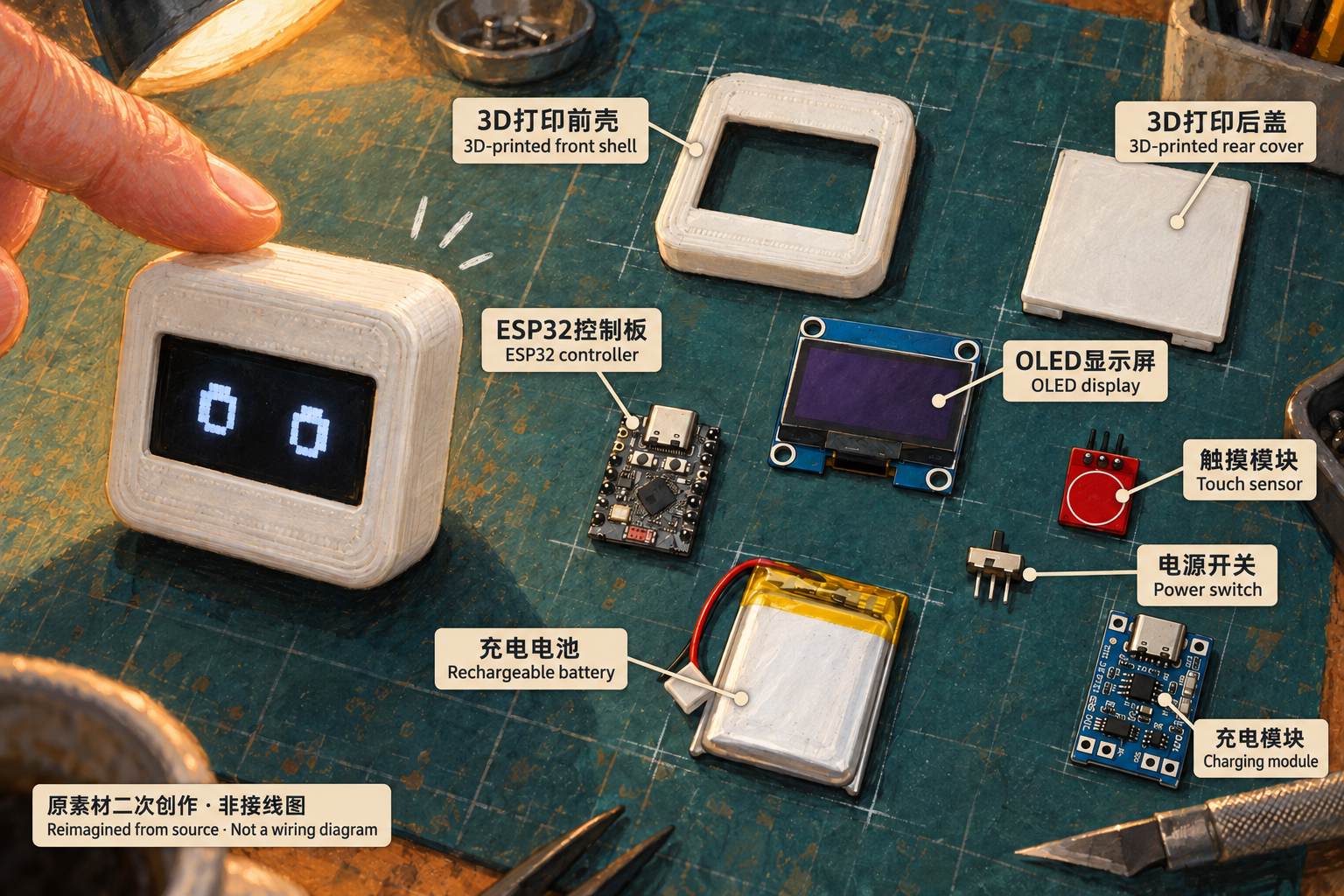
There’s something funny about seeing a desktop pet laid out in pieces. Your little “companion” turns out to be a screen, a controller b…