

Wait—Could This Board Finally Fit Inside a Round Case?
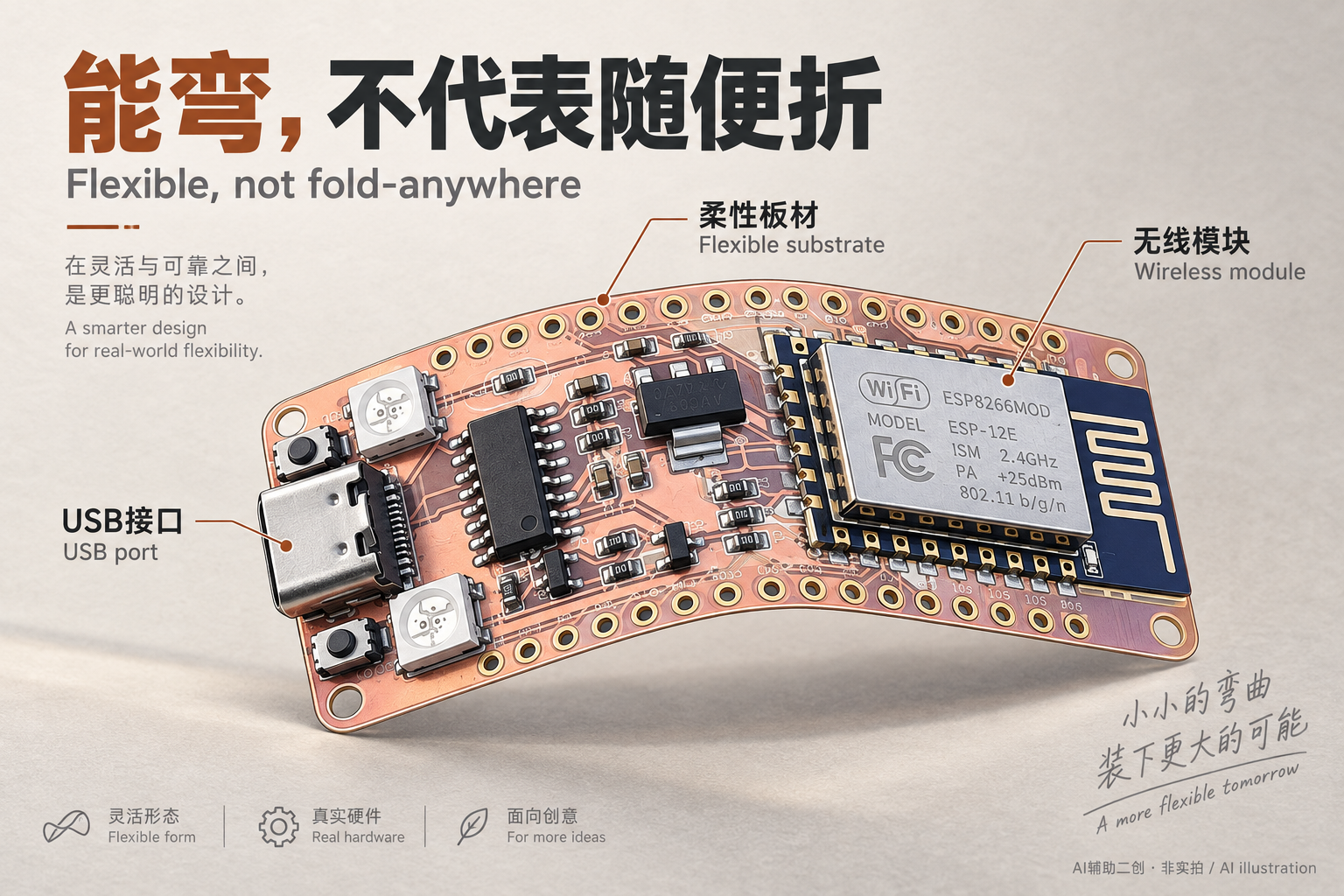
Hang on. Stop bending it for a second. Let me see the USB end.
This photograph of a curved NodeMCU board makes me curious and nervous at the same time. The thin copper-colored material bows, taking its two rows of holes along with it. The connector and wireless module remain stubbornly solid. I'd want to try bending it myself, while imagining the tiny crack that could end the fun.
It brings a particular project to mind: a cylindrical desk status light. A frosted shade, one color for working, another for taking a break. Nothing huge—ideally something small enough to hold in one hand.
Then I'd need to fit a rectangular development board inside that round shell, plus room for the plug. Suddenly my neat little object would start getting wider.
So my immediate thought on seeing this board is: could it follow the inside of the case?
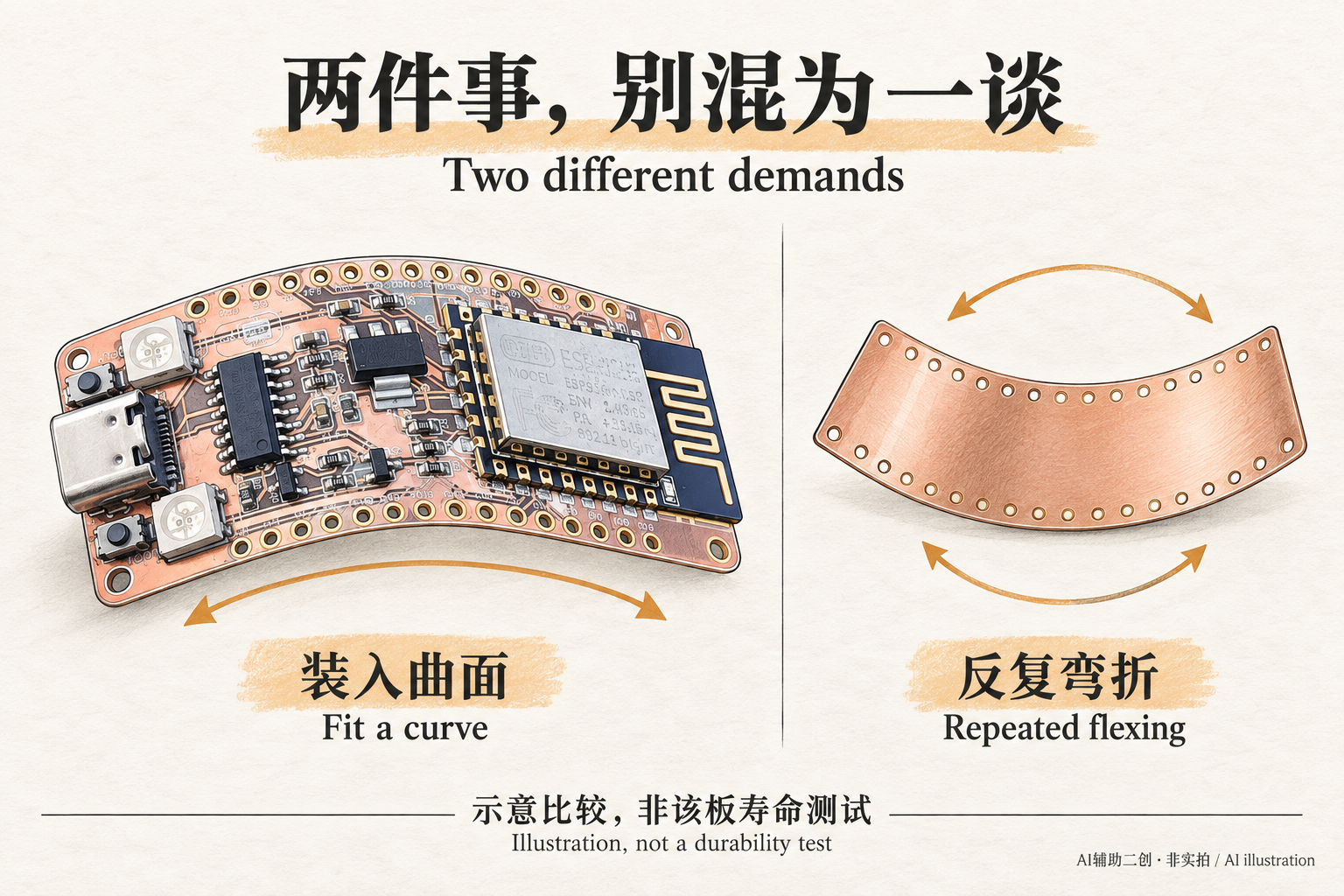
Slow down. Before ordering anything, I'd cut a paper outline and try it in the enclosure. A flexible substrate doesn't make the USB connector or chips accommodate every shape I can draw. Connector direction, cable routing and whether the lid closes would all still need sorting out.
I wouldn't want to keep squeezing it like a stress toy, either. Bending a flex circuit into position is different from bending it repeatedly in use. For this idea, a suitable curve that stays securely in place would be plenty. Whether this particular board could do the job would need checking against its design information.
The bit I'd dread is finishing the printed enclosure and discovering that it's two millimeters too small. Reprinting wastes time; forcing it risks the board. If someone makes a tutorial about a project like this, I hope they leave those moments in. Watching how they solve “almost fits” could be more useful than the final shot of the light switching on.
For now, I'd write down the idea: frosted cylinder, gentle light, removable base, no tangle of wire hanging out. And a budget. Otherwise it could end up costing more than buying a finished lamp.
Still, if the lid finally closed and the light came on when I plugged it in, I suspect I'd stop worrying about the price for the rest of that evening.
评论与解答 0